
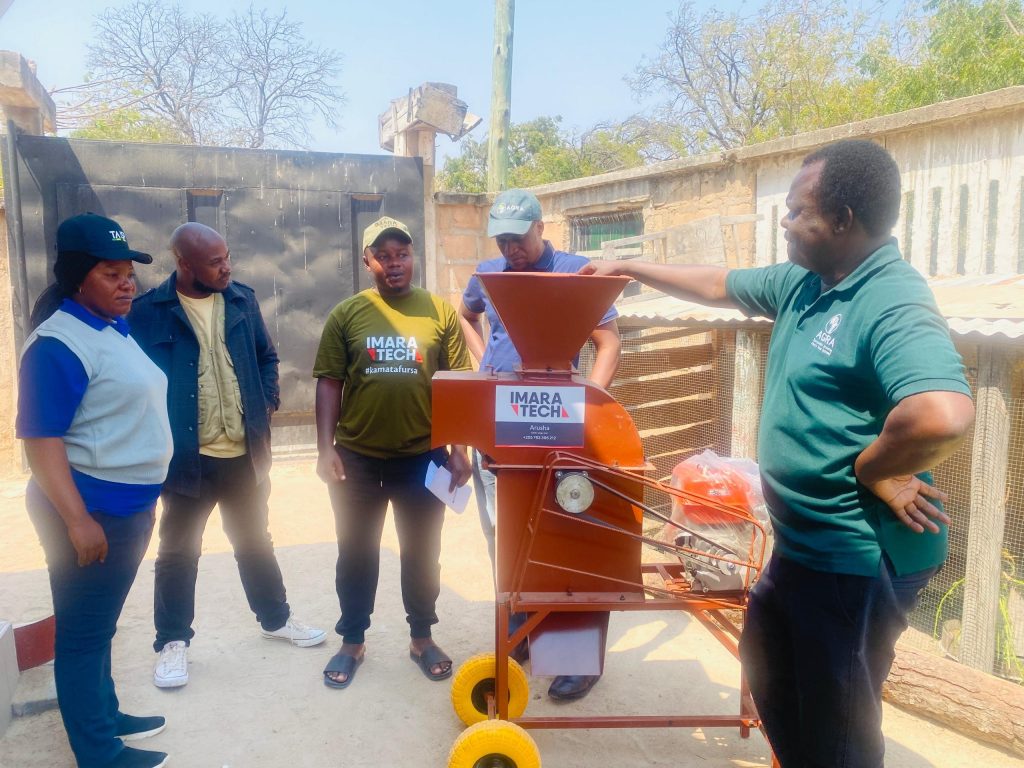
On Monday, 15th September 2025, TAPBDS and AGRA conducted a joint field visit in Dodoma to three distinct youth-led enterprises supported by the YEFFA project. The team, which included Ms. Julieth S. Ezidory, the YEFFA Coordinator from the Regional Agriculture Office, witnessed how strategic interventions are helping young people build livelihoods. The visit underscored the diverse pathways to success, from machine ownership and fabrication to value addition.
Imara Tech: Access to Mechanization: At the Imara Tech Zonal Office in Area C, Manager Hosman Ndesamburo detailed how the partnership with YEFFA and TAPBDS is putting productive assets directly into the hands of young people. To date, 28 youths have successfully completed payments to fully own a multi-crop thresher, while another 17 are in the process of paying via installments. This versatile machine, capable of threshing nine different crops including maize, beans, and sorghum, is prized for its efficiency and portability, enabling youth to run profitable service-hire businesses.
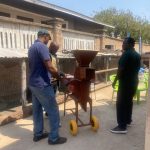
Othman Hafidha’s Workshop -Building Skills in Fabrication: Located along Viwandani Street, artisan Othman Hafidha is mentoring five young men under the SIDO framework. Here, the focus is on practical, hands-on skills in machine fabrication. The apprentices are learning to build essential agricultural equipment such as maize shellers, threshers, sunflower oil pressers, and wells. This mentorship is equipping them with valuable technical expertise, opening doors to new and improved employment opportunities within the agricultural value chain.
Women Rise -Championing Value Addition: In Miyuji Proper, the tour visited Women Rise, a group of five young women making their mark in horticulture. Through YEFFA support, the group has been formalized and linked to finance. They use solar dehydrators to add value to their crops, reducing post-harvest losses and increasing their income. Their enterprise has also created a collaborative network, engaging 11 other youths who assist with transportation and crop sorting, demonstrating how a single business can generate wider community engagement.
The day concluded with a partners’ reflection meeting, where AGRA provided feedback and stressed the importance of meticulously capturing job creation metrics under the categories of new, improved, additional, and sustained to ensure a comprehensive understanding of the project’s impact.